
Focused Ultrasound: New Treatments for Epilepsy
Part of Latest Advances in Intracranial Ablation
Details
- Date
- Friday, January 22, 2027
- Time
- 7:15 AM – 7:25 AM
- Session type
- Breakfast Session
- Schedule
- See this day
About
This session aims to understand the latest advances in utilizing focused ultrasound and laser interstitial thermal therapy (LITT) for the management of a variety of intracranial disorders including movement disorders, refractory epilepsy, and oncologic processes.
Presenters
-
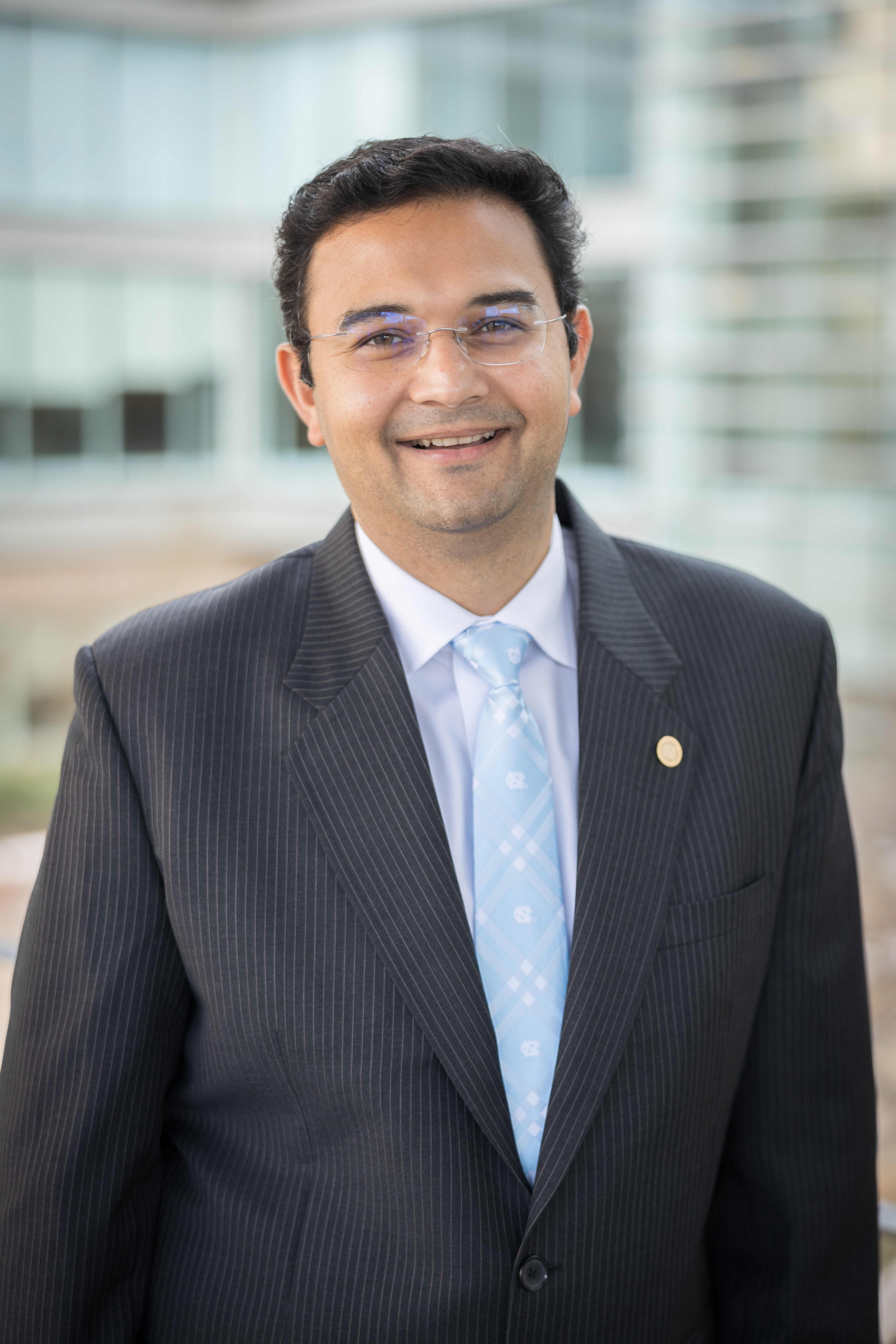
Vibhor Krishna, MD
Associate Professor with tenure
University of North Carolina Chapel Hill · Chapel Hill, North Carolina
Dr. Vibhor Krishna is a board-certified neurosurgeon specializing in functional neurosurgery. He currently holds the position of Associate Professor with tenure and Vice Chair of Neurological Surgery at the University of North Carolina, Chapel Hill. As a surgeon-scientist, one of the most exciting areas of his work is the development of focused ultrasound (FUS) technology to treat neurological disorders. He leads an NIH-funded research program to optimize the technique of FUS ablation. His research has catalyzed key advancements, including the launch of a Phase-1 clinical trial of FUS in patients with treatment-refractory epilepsy, which has yielded promising initial results. He was deeply involved with the Phase-2 and Phase-3 multicenter trials that secured FDA approval for treating Parkinson's disease with FUS.
-
Vibhor Krishna, MD
Associate Professor with tenure
University of North Carolina Chapel Hill · Chapel Hill, North Carolina
Dr. Vibhor Krishna is a board-certified neurosurgeon specializing in functional neurosurgery. He currently holds the position of Associate Professor with tenure and Vice Chair of Neurological Surgery at the University of North Carolina, Chapel Hill. As a surgeon-scientist, one of the most exciting areas of his work is the development of focused ultrasound (FUS) technology to treat neurological disorders. He leads an NIH-funded research program to optimize the technique of FUS ablation. His research has catalyzed key advancements, including the launch of a Phase-1 clinical trial of FUS in patients with treatment-refractory epilepsy, which has yielded promising initial results. He was deeply involved with the Phase-2 and Phase-3 multicenter trials that secured FDA approval for treating Parkinson's disease with FUS.